Wednesday, May 2, 2012

Butterfly Mind, Pollen Heart

Beauty above me, 
Beauty below me,
Beauty before me,
Beauty behind me,
I walk in Beauty.

Navajo (Dine`) Prayer

"Art is not a thing, it's a way of life" 

(seen on the billboard of the First Congregationalist Church this morning in La Verne, Ca.)

It's May Day as I write, Beltane, although, considering the previous article, "May Day" may also mean a huge cry for planetary help.  

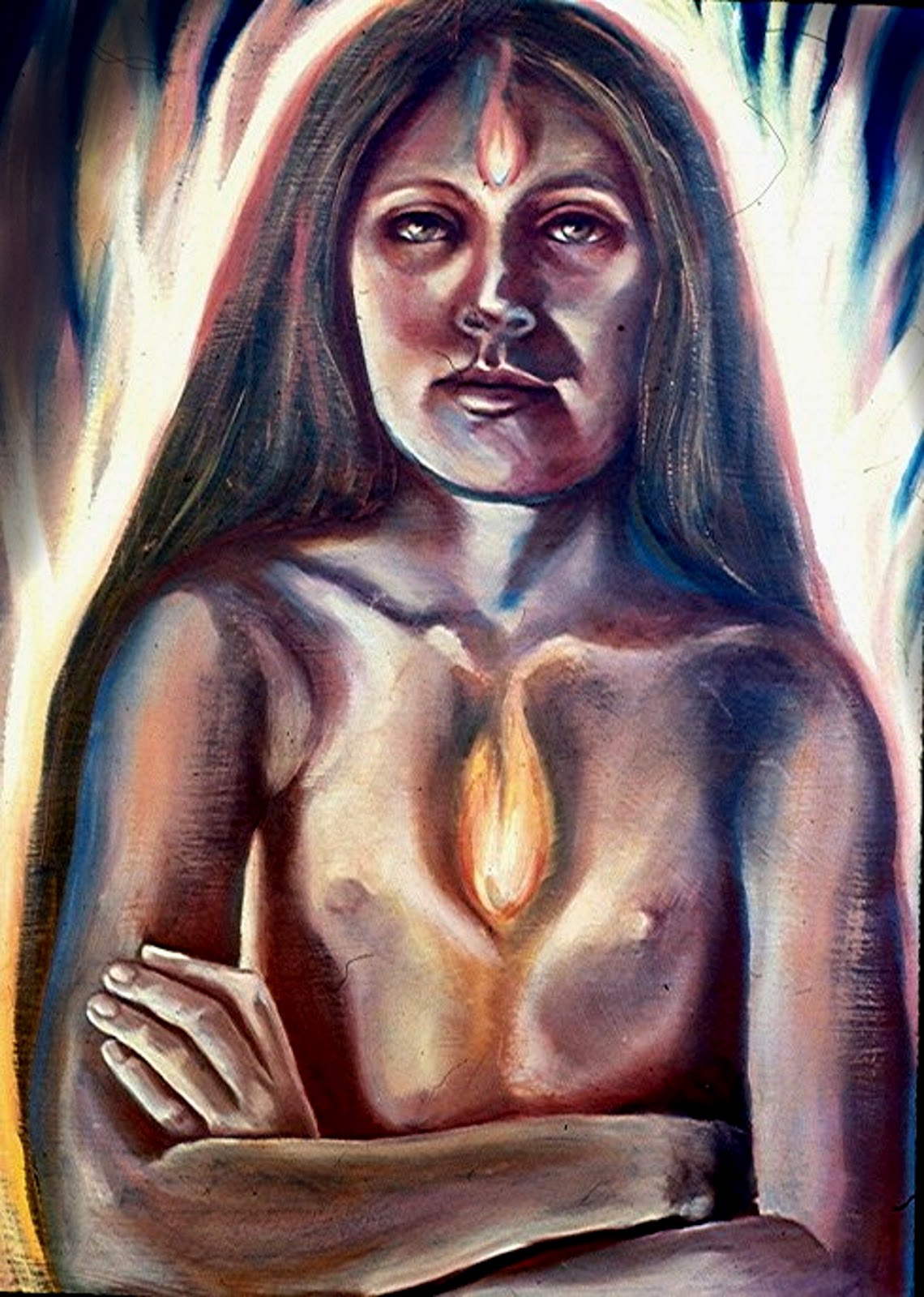
 I love the painting above, which I found in a magazine; I don't know who the artist is, but thank him or her often for this  "Butterfly Woman" from whom thoughts like butterflies emanate out into the world to do their work. Perhaps the artist will forgive me that I do not know his or her name........but be glad that the work has gone forth to do its work in my heart and imagination.  Pollen:  agent of new life, new hope, transformation. 

As we (well, some of us) wind our way to the May Pole, and plant that metaphor into the still fertile earth, weaving our dreams into the ribbons of this ancient ritual of fertility, perhaps I can find a way to image the celebration of love and hope with a vast, global cry for help that sounds like a beating heart beneath the surfaces of our lives, just beneath our feet.  As the drums and penny whistles sound, as we dance, may we all become Pollinators for our time, for the future.

Like the woman who walks above, this is my prayer:    May we have butterfly minds, pollinator hearts.

Peace March against the war in Iraq, San Francisco, 2003

 
The ancient Greek word for "butterfly" is ψυχή (psȳchē), which means "soul" or "mind".  And I have often found them mysteriously "soulful", as they seem to flit in and out of mystery.  The picture above, for example - it was from the San Francisco Chronicle at the time of the great peace march against the incipient Iraq war, and shows three friends with their "soul icons" - me in the mask of Sophia, Alan Moore, founder of the Butterfly Gardeners Association, and Nicole, creator of "Cosmic Cash".  Note that her icon, also, has occurred in this synchronistic photo. 

Transformers, pollinators .......... they begin their lives as caterpillars, build a crysalis, and generate imaginal cells...........
"When a caterpillar nears its transformation time, it begins to eat ravenously, consuming everything in sight. The caterpillar body then becomes heavy, outgrowing its own skin many times, until it is too bloated to move. Attaching to a branch (upside down, we might add, where everything is turned on its head) it forms a chrysalis—an enclosing shell that limits the caterpillar’s freedom for the duration of the transformation.....Tiny cells, that biologists actually call “imaginal cells,” begin to appear. These cells are wholly different from caterpillar cells, carrying different information, vibrating to a different frequency–the frequency of the emerging butterfly. At first, the caterpillar’s immune system perceives these new cells as enemies, and attacks them, much as new ideas in science, medicine, politics, and social behavior are viciously denounced by the powers now considered mainstream. But the imaginal cells are not deterred.  They continue to appear, in even greater numbers, recognizing each other, bonding together, until the new cells are numerous enough to organize into clumps. When enough cells have formed to make structures along the new organizational lines, the caterpillar’s immune system is overwhelmed. The caterpillar body then become a nutritious soup for the growth of the butterfly."


from Imaginal Cells and the Body Politic by Anodea Judith Ph.D.
Photo from: http://www.fishersville-umc.org/classes/nac/Pics/week0401.htm
 If we can see that our thoughts participate in  pollinating the future, we can  perhaps find ways of living with simplicity and honor, even in a time so very out of balance.  Regardless of where one is, there is a profound need to "walk in Beauty".  To be "on the Pollen Path".

Without the grace of the pollinators, the butterflies and hummingbirds and bees, there will be no future.  This idea is fundamental to spiritual traditions of native peoples of the Southwest, including the Pueblo peoples, the Navajo and the Apache.  As shown above, when this young Apache woman came of age and entered into her fertile years, she was honored by the tribe with symbolic pollen.

 "The Pollen Path" is a healing and initiatory ceremony/concept among the Dine` that variously enacts a mythic journey, and demonstrates a cosmology of non-duality.  "Pollen Path" art and sand paintings often show the union of opposites, such as red sun and blue moon, as well as mandalas, the balance achieved within the circle.   In keeping with May Day, Psyche in Greek mythology was a beautiful girl who was loved by Eros, the god of Love. Here is "fertility", generation, pollination..........the union of soul/mind with love.  

As I imagine a "pollen path" for our time,  and emanations of hope and beauty,  I reflect as well that some butterflies, like the Monarch or the Painted Lady, are migratory.  Monarch butterflies will migrate over very long distances, as amazingly frail as they seem.  Some travel from Mexico to the norther parts of the United States and into Canada, a distance of over 2,500 miles. 

Lastly, a few thoughts from one of my favorite storytellers, Dr. Clarissa Pinkola Estes, on the work of the Butterfly Dancer.  May we all, women and men, young and old, become Butterfly Dancers this May Day.
  "The (Hopi) butterfly dancer must be old because she represents the soul that is old. She is wide of thigh and broad of rump because she carries so much. Her grey hair certifies that she need no longer observe taboos about touching others. She is allowed to touch everyone: boys, babies, men, women, girl children, the old, the ill, and the dead. The Butterfly Woman can touch everyone. It is her privilege to touch all, at last. This is her power. Hers is the body of La Mariposa, the butterfly."

"La Mariposa
" from Women Who Run with The Wolves by Clarissa Pinkola Estes

Clarissa Pinkola Estes  tells the story of waiting to see the "Butterfly Dancer" at a ceremony.  Tourists, unused to Indian Time, wait throughout a long, hot, dusty day to see the dancer emerge, expecting, no doubt a slender, ephemeral Indian maiden, and they are no oubt they were shocked out of their patronizing cultural fantasy to see at last the grey haired  Dancer/Pollinator emerge, slow, not young, with her traditional tokens of empowerment.
"Her heavy body and her very skinny legs made her look like a hopping spider wrapped in a tamale. She hops on one foot and then on the other. She waves her feather fan to and fro. She is The Butterfly arrived to strengthen the weak. She is that which most think of as not strong: age, the butterfly, the feminine."
Because in the agricultural ritual these dances symbolize and invoke, call in, the forces that initiate the  vital work of pollination, this is no job for for an inexperienced girl, no trivial token flight for a  pretty child. It's a job for one who has lived through many cycles, and can seed and generate the future from a solid base.
"Butterfly Woman mends the erroneous idea that transformation is only for the tortured, the saintly, or only for the fabulously strong. The Self need not carry mountains to transform. A little is enough. A little goes a long way. A little changes much. The fertilizing force replaces the moving of mountains.

Butterfly Maiden pollinates the souls of the earth: It is easier that you think, she says. She is shaking her feather fan, and she’s hopping, for she is spilling spiritual pollen all over the people who are there, Native
Americans, little children, visitors, everyone. This is the translator of the instinctual, the fertilizing force, the mender, the rememberer of old ideas. She is La voz mitológica."

"La voz mitológica". The mythic voice.  The Mythic Voice re-enchants the world around us, lending luminosity to each footstep, and pollinates, energizes, en-chants those who hear.   It is transparent, permeable.  And one way to walk the Pollen Path.


* The Pollen Path http://unurthed.com/2007/05/24/the-navajo-pollen-path/

Monday, April 30, 2012

Nuclear Situation in Japan

Image from the NY Times (http://www.nytimes.com/2011/03/15/world/asia/15nuclear.html?_r=1)

"Fukushima radiation spreads worldwide.........the University of California at Berkeley detected cesium levels in San Francisco area milk above over EPA limits" 

WashingtonsBlog

My friend Fahrusha has written an article recently about the disaster that occured in Japan after last year's earthquake.  I know that this has nothing to do with art, but I feel her article is very important, and so, with her permission, I copy it here, and suggest those interested view her blog as well.  Do we need any more proof that we are, truly, all One on our planet?


 Fukushima, the Media, and the Reality-based Worldview 

By Fahrusha from Fahrusha's Weblog

I have not wanted to write about Fukushima, because I have nothing good to say. My grandmother used to tell me “If you don’t have anything nice to say about someone, don’t say anything at all.” Sadly, I have not entirely lived up to her words, but I have tried. The Japanese people have much to overcome in their current situation and I do not wish to make their lot any worse than it is, and that would be difficult to do in any case.

I have been following closely the situation involving the nuclear reactors which were affected so disastrously by the earthquake off the coast of Japan last spring. The site from which I have gotten most of my information is Arnie Gundersen’s Fairewinds Associates. Mr. Gundersen and his wife have been steadfastly reporting the bad news that is horrible to hear, but it is bad news that we must force ourselves to hear. His is a wake-up call to all Americans that nuclear power is inherently horribly dangerous and that danger once unleashed is complete and lasting annihilation. American nuclear reactors are mostly old and past the date which they were originally intended to be taken off line. This adds to the danger as leaks are more likely from old reactors. The single piece of good news is that solar power has surpassed nuclear power in energy production in the United States.

In a nutshell, the Fukushima nuclear disaster is far from being over. The site is still red hot with nuclear particles. Tokyo itself, 148 miles away from the Fukushima reactors, should probably be evacuated. The level of contamination of random ground samples in Tokyo would be considered hazardous nuclear waste in the US.  The officials of TEPCO (Tokyo Electrical Power Company?) who run the Fukushima facility and the Japanese government have been lying to their citizens and to the world. TEPCO is even burning nuclear waste and putting hot particles in the atmosphere that we all breathe. They have become mass murderers as many innocent people and animals around the world who unwittingly breathe those particles will die horrible deaths from various cancers. This is not supposition, this is fact.
The US is in collusion with the cover-up of the facts. Please read the following articles:
http://www.shtfplan.com/headline-news/the-radiation-warnings-you-wont-get-from-the-mainstream-propaganda-machine_04022012
http://www.washingtonsblog.com/2012/01/fukushima-radiation-spreads-worldwide.html

I am extremely disappointed in Hillary Clinton in that she signed an agreement to the effect that the US would continue to import goods from Japan without subjecting them to testing for radiation.
Why has the media chosen to ignore the obvious danger coming from Fukushima and why do the government and various states continue to champion the building of these reactors, these machines of certain doom, although there are other cleaner energy options such as solar, wind, water and geothermal energy available? Many European countries whose populations may be more awake than Americans have begun the phasing out of all nuclear power from their borders. In fact the nuclear industry is greatly tax subsidized by the American taxpayer: See this Alternet story by US Senator Bernie Sanders and Ryan Alexander.

The Fukushima situation is worse than the disaster of Chernobyl in the Ukraine. Take seven minutes out of your busy life to look at the legacy of Chernobyl here. Notice that Chernobyl is estimated to have caused nearly a million cancer deaths worldwide.  Now realize that the Fukushima disaster will continue to cause cancers for the next 100,00o years. Yet our mass media outlets continue to ply us with vacuous stories and little to no information on this very real menace.

Please keep checking these internet news resources for valuable information, it may be the most important thing you can do for yourself, the environment and generations to come.
Fairewinds Associates
Nuclear Age Peace Foundation
The SchwartzReport
The Fukushima Diary

Monday, April 23, 2012

Orbs at my house

I had my artist friend Ginny over for dinner last night, and before leaving she took some photos of the night sky over my house.  I was amazed at the orbs that showed up!  She and friend Charlie asked for colors...........and sure enough, a beautiful red orb, and a blue, appeared in the photos.


And of course, she also shared the recent summer appearance of her lizard, Marco, at his Retreat.


Thursday, April 19, 2012

Rumi and Rilke, a Moment


 When grapes turn to wine, they long for our ability to change.
When stars reel
around the North Pole,
they are longing for our growing consciousness.

Wine got drunk with us,
not the other way.
The body developed out of us, not we from it.

We are bees, and our body
is a honeycomb.
We made
the body, cell by cell, we made it.


Rumi (Translated by Robert Bly)
 

Sometimes a man stands up during supper
and walks outdoors,
and keeps on walking,
because of a church
that stands somewhere in the East.

And his children say blessings on him as if he were dead.
And another man,
who remains inside his own house,
dies there, inside the dishes and in the glasses,
so that his children
have to go far out into the world
toward that same church,
which he forgot.

Rainer Maria Rilke  (translated by Robert Bly)

Monday, April 16, 2012

Anthropocene: the "Age of Man"?


"The  Council  of All Beings is a series  of  re-Earthing  rituals created  by  John  Seed and Joanna Macy to  help  end  the  sense of  alienation  from  the  living Earth that  many  of  us  feel.  Through  interactive   exercises,   we practice  letting  go of the socially constructed,  isolated self and come home  to our inter-existence with all  forms of life.  We  retrace our  steps through our evolutionary journey and allow other  life forms to speak through us. We shed our  solely human identification  and feel deep empathy for the myriad species and  landscapes of the Earth.  We see that the  pain of the Earth is our own pain." 

Council of all Beings Workshop Manual

It's ironic that as i listened to the video below, which suggests that we have rapidly been moving into the "Anthrocene",  or the "geological epoch of man", two earnest theological students are talking about God's goodness at the table next to me, and "His will".  I'm glad they can't read my mind..........

I think, once upon a time, I understood their faith. And by no means am I denigrating many of the compassionate teachings of Jesus of Nazareth.   It would be comforting to be nested into such a faith, a human faith that doesn't include polar bears, or plankton, or eco-systems, or even many women in its vision of  divinity and mono-theism.   I fancifully  imagine a discussion next door about the sanctity of  the evolution of all the eco-systems and  Sentient Beings upon this increasingly small, infinately precious planet....and find myself entering into  silent dispute with the commentators in the video as well..........what would it be like if this was the "Age of Woman", or at least, the more egalitarian "Age of Humanity"? Would it  make any difference in the face of our technology driven civilization, of a new god whose name is Profit? Sometimes I think so, other times I view our civilization is a run-away train.  
"THE GURU PAPERS critiques the guru/disciple liaison because it is a clear-cut example of the old, no longer appropriate paradigm of spiritual authority. It is not that we doubt that some who are considered gurus have deeper insights than their followers. Yet even with the best intentions, assuming the role of spiritual authority for others sets in motion a system of interaction that is mechanical, predictable, and contains the essence of corruption. Another purpose of this book is to show that corruption is not simply the failure or weakness of a specific individual, but is structurally built into any authoritarian relationship, and less obviously, any renunciate morality."(p.35)

In their book THE GURU PAPERS - Masks of Authoritarian Power,  Joel Kramer and Diana Alstad** coined the term "Renunciate" systems, referring to religious and social systems that are derived from an inherent renunciation of the world, a denial of body and flesh, of the  "here and now" of  life. I think it's a brilliant book that examines many contemporary spiritual systems from the point of view of the old paradigm of authoritarian, hierarchical systems, and is no doubt disturbing in the challenge it offers  to a broad spectrum of beliefs, from fundamentalist Christianity, to the "surrender to the Guru" advocated by Hindu ashrams, to a discussion of the "tyranny of Oneness" found in Eastern religions,  to such popular New Age systems as the "Course in Miracles". 

“Beware of organizations that proclaim their devotion to the light without embracing, bowing to the dark; for when they idealize half the world they must devalue the rest.”
Starhawk
 One thing these systems share in common is a sometimes subtle underlying assertion that "This is not real".  That the ultimate (and hence, the only important "reality") is somewhere else than within our bodies and bodily experience (which include the collective cycles of nature), or within the living world.  Whether conceived of as a pristine heaven or paradise wherein the chosen or saved are rewarded (after suffering the indignities of life), or something more esoteric that is more "real" and "better" than life,  "renunciate" systems are "transcendent" in their message rather than "Immanent" or "numinous".  What is sacred is somewhere else, and you need a spiritual authority of some kind or degree to get you there.    

The Authors point out that systems that teach us to believe that "what is sacred is somewhere else" , or to continually render our will and discernment over to "spiritual authorities" will also not help us to deal with the actual crisis of our time.  I might add that many of the systems they discuss, renouncing  and devaluing  "worldly experience", also teach a kind of useless passivity as well (which goes along nicely with authoritarian systems).    As Starhawk once said, "If we go with the flow, we're flowing straight into extinction."

We need to break the long spell, to learn to speak and to listen to the Earth.  How can we create new theologies, mythologies, that can speak to the hearts and imaginations of the future in ways that teach Immanance?  I think as I write of the movie Avatar, for example............or the procession that took  the "waters of the world" to the river Brue, to flow out into the world as a healing from Avalon at Glastonbury last year when I attended the Goddess conference.   Small or large, important ways to re-myth, re-sanctify, so important for all of us to take in, and create out into the world.   It's our task to speak,  by whatever means, whatever means, because if not us.........who?  So many of our relations, and those who are yet unborn...........have no voice...

 Anthropocene, or the Age of Man.


___________________________________________________

www.authoritarianpower.com

“Easily the most comprehensive, erudite, and timely book in print to explore authoritarianism in religion, institutions, power, the family, intimacy and sexual relations, and personal problems such as addiction.... Argue[s] persuasively that any system of values that places tradition and the past above the imperative to question the present is destined to become increasingly lethal."

— SAN FRANCISCO CHRONICLE SUNDAY BOOK REVIEW

Wednesday, April 11, 2012

Sig Lonegren on Dowsing and Quantum Phenomena

I'm not able to find much time (or place) to write at present, so I'm going to cheat my own journal and copy here a recent article by Sig Lonegren, my teacher of old who, with his wife Karin (an extraordinary  healer), I was privileged to meet last summer when I went to Glastonbury.  But that's another story, my pilgrimage to Avalon.  Sig is wise, funny, and very much "down to Earth" on many levels.  Enjoy.

Tip o' the Week # 104 - Dowsing and Quantum


If you are not familiar with the Double Slit Experiment, please go to YouTube and watch a short animated film on it before you read further.  I have been reading about Quantum physics for over thirty years.  The first to catch my eye was Werner Heisenberg and his finding that there is no such thing as an observer being separate from the observed.  The Double Split experiment can help you see how this is possible.

The build-up of an interference pattern as individual particles pass through two side-by-side slits in a screen is one of the most famous examples of how an entity such as an electron can behave both as a particle and as a wave.  Aside from making the point that sometimes matter and wave can switch back and forth,  the main point I want to make here is that simply by observing the an electron shooting toward the two slits makes it act differently.  The observer becomes one with the observed.  One of the basic cornerstones of Newtonian physics is that the observer must remain totally objective.  But this double split experiment showed that this is not possible.

There is no such thing as a totally objective observer.  And the observer not only can, but does affect the observed.  Of course, one of the basic caveats in dowsing is not to be attached to the outcome, because if you are, your dowsing will support your unconscious need for a specific answer,  "Does my Aunt have cancer?"  ("Dear God, make it 'No'!")  You will get a "No," for sure.  Your unconscious wants to give you the answer it thinks you want to hear.  This is why in my eight steps to good dowsing, after tuning in and asking the question, I say repeatedly, "I wonder what the answer is going to be! I wonder what the answer is going to be! I wonder what the answer is going to be!"  As long as I am saying that, I can't be saying, "Dear God, make it 'No'!"

So we can create our dowsing answer.

Here is where Tony Talmage comes in.  Last weekend, I was at the BSD Earth Energies Group Spring Meeting just outside of Cheltenham.  Tony, who is Chairman of the Guernsey Society of Dowsers, spoke on "Dowsing and the Quantum Connection."  He spoke of quantum entanglement.  According to Wikipedia, "When a measurement is made and it causes one member of such a pair to take on a definite value (e.g., clockwise spin), the other member of this entangled pair will at any subsequent time be found to have taken the appropriately correlated value (e.g., counterclockwise spin). Thus, there is a correlation between the results of measurements performed on entangled pairs, and this correlation is observed even though the entangled pair may have been separated by arbitrarily large distances."

This is what happens with map dowsing and perhaps what happens when dowsers work at a distance - there is no distance.  Tony writes, "The hair, the spot of blood, gemstone, oil, water or other witness, (and, I'd add permission) is used by the dowser to connect to its parent.  This weird world of quantum offers a scientific explanation for the weird world of the geomancer."

Talmage then goes deeper to suggest that the dowser can actually create reality.  He feels that our human consciousness gives form to the symptoms we are told about, and so we bring in to manifestation the negativities described.  I believe this is behind what I call "Sig's Hypothesis Number One - Even if they were trained by the same teacher, the chances are very good that when dowsing for intangible targets (like the Earth Energies in a sacred space or in a 'sick house'), no two dowsers will find exactly the same thing."  We each find what our particular paradigm causes us to find.  We each have our own individual sacred point of view, and therefore create our own reality.

Throughout his talk, Tony spoke of how difficult it was to understand how quantum works, and used something Nobel Laureate Richard Feynman once said, "if you think you understand quantum mechanics, you don't!"

But I feel that I got a better vision last weekend of the possible connection between Quantum and dowsing.  I believe that this will be an important  part of what the American Society of Dowsers meant when they chose their motto, Indago Felix! - The Fruitful Search!  Look for more discussion about this within the BSD in the coming year.

Sig Lonegren
MAG Webmaster
SunnyBank, 9 Bove Town
Glastonbury, Somerset
England BA6 8JE
http//:www.geomancy.org
http//:www.sunnybankglastonbury.co.uk
sig@geomancy.org
+44 (0)1458 835 818

p.s. If you haven't checked out my latest iBook, The Earth Mysteries Handbook: Holistic Non-Intrusive Data Gathering Techniques, please go to iTunes and download a copy.

Thursday, April 5, 2012

Shadow and Light - "Heyoka"

Photo of Lakota Heyoka by David Michael Kennedy

 "While the good people of the world work to gain those  modern  Heyokas  look to lose, and thus to live simply. The Buddha was once asked what he had gained from enlightenment and he replied that he had gained nothing."
 
"Become Nourished by the Great Mother and Gain Nothing" by Grant Lawrence, from HEYOKA MAGAZINE 

I've been wanting to let it rip and write about shadow lately, personally, psychologically, archetypically and collectively.  I think it's so important for our time, our world, our crisis.  And it occurs to me that the  place to start is with the idea of the Trickster, the liminal deity so often found in native cultures. 


The Lakota have a wonderful spiritual tradition  of the Heyoka, or the Heyoka priest.  Heyokas are sacred clowns, with the function of reminding the tribe that life is also chaotic, liminal, funny, and surrounded by a mystery that has a way of paradoxically grinning like the Cheshire cat just when you think you have it all figured out.

According to Wikipedia,
 "Heyókȟa are thought of as being backwards-forwards, upside-down, or contrary in nature. This spirit is often manifest by doing things backwards or unconventionally—riding a horse backwards, wearing clothes inside-out, or speaking in a backwards language. For example, if food were scarce, a Heyókȟa would sit around and complain about how full he was; during a baking hot heat wave a Heyókȟa would shiver with cold and put on gloves and cover himself with a thick blanket. Similarly, when it is 40 degrees below freezing he will wander around naked for hours complaining that it is too hot."
 Perhaps you've seen paintings of the black and white painted clowns of the Zuni - even at the most important of ceremonies, such as the corn dances, they are free to roam about, pinching the women or making rude gestures.  I've heard Jungians talk about the "trickster archetype".  The trickster is great at puncturing inflated egos and projections that get in the way of reality, as well as the vast abstractions the human mind is capable of constructions that equally get in the way of either reality, or the simple act of opening the heart. The Trickster reminds us that things are built up and constructed, but they also fall apart and get de-constructed.  Sometimes that's a good thing.  But like it or not, it's the impermanent and often contrary truth of life, art, and self.  The Heyoka reveals cracks in the wall and opens cracks in the psyche, and sometimes throws a pie in the face of our treasured certainties.  
Pipe smoking ET crop circle (Wiltshire, 2011)

 Like Leonard Cohen said: "there's a crack in everything - that's how the light gets in."

Recently, a few lines from Sylvia Plath's poem "Lady Lazarus" came to mind, probably because I'm selling at a crafts faire, and there are times the "peanut crunching crowd".....well, to be honest, gets on my nerves.  I'm getting too old for this!

So I googled the poem, and it came up right away embedded in a very serious  blog that was analyzing poor Sylvia's poem as follows:
"the archetype of the perfected ego, the incarnation of the Sun logos in the physical world, was the hierophant who initiated Lazarus as a transition to modern Christian esotericism---
"The Peanut-crunching crowd
  Shoves in to see
  Them unwrap me hand in foot ------
  The big strip tease.
  Gentleman , ladies
  These are my hands
   My knees
. "-------Plath's meditation highlights the importance of the public nature of the raising of Lazarus. The Pharisees, who were the representatives of the Old Mysteries, considered the raising of Lazarus as a betrayal and violation of the ancient mystery traditions. What had always been secret was made public."
OMG, just reading this gave me a migraine, but I morbidly  continued, sensing that, indeed, something "secret was made public" in this random web search, something a short, black and white painted Contrary was pointing to with glee.  How the heck do you abstract Plath's intimate cry of pain and rage into something like that?  With, I suppose, the same capacity that we are able to turn the immanent  loss of the Arctic habitat into dancing animated polar bears that sell soft drinks.  Failing to notice that the production of such disposable soft drinks is one of the reasons this is happening in the first place.  

I think this is where the shadow dancer, the Heyoka, the dark trickster needs to make her/his appearance, whether we're talking poetry, anthropology, or environmental meltdown.  Abstractions are too often the masks that obscure the truth, or close the heart.  Here's to the Sacred Clown!

ps...........Valerianna kindly turned me to a very thoughtful site that is related to the issue of  environment, shadow and art:  http://dark-mountain.net/

Tuesday, March 27, 2012

The Art (and Orbs) of Ginny Moss Rothwell (Pt. 1)

"Petroglyph" (based upon Tibetan petroglyphs)

I wanted to share the unbelievable mosaic art of Ginny Moss Rothwell, who is also a neighbor of mine, living in the "poet's corner" area of Tucson.  I went  to her house recently to view her paintings done in pieced tile and glass,  and came away not only amazed at the  beauty, and very unique craft  of her work, but also the conversation we had about orbs.  Ginny has photographed thousands of orbs for years, and like the friendship she has with the  birds and animals that live in her back yard (and often visit her art as well), I can say that Ginny has a friendly relationship with  many "invisible collaborators" as well.  Asking for  colors in some of her "orb photos" she has been able to show photos of orbs that appear in various colors - violet, blue, green or red. 

In fact, there's so much material she kindly gave me permission to share on the subject, that I need to break this post into two sections, one to share her artwork, and the next will be about the orb photographs.  

"Jewel in the Lotus" (Quon Yin)


This mosaic, like "Quan Yin and the Dragon King" below, is the Goddess of Compassion, Quan Yin, who is also related to Tara in Tibetan Buddhism.  In the mosaic below, based on traditional sacred imagery, Quan Yin is with the Dragon, as she is also above, portrayed as a modern woman.  I love the orbs that occur throughout the works as well, the invisible presences and energies.  Here's Marco,  the model for the Dragon King, another one of Ginny's friends who has his own lizard apartment complex in the back yard.
"Quan Yin and the Dragon King"


Here's Ginny at work in her studio, and below a wonderful piece dedicated to Frieda Kahlo - I love the milagros that she uses to frame the work.  For anyone not familiar, "milagros" (I'm used to seeing them in silver, and identified with specific parts of the body, such as the heart, or foot, or hand, etc.)  are religious charms that are traditionally used for healing purposes in Mexico,  They are often attached to altars, shrines, and left as a petition for healing in places of worship, and can be purchased in churches  or from street vendors. 

"Frieda" (with milegros)


This portrait of Frieda includes Chopra, Ginny's friend and model who happens to be a mockingbird.  I once had a mockingbird friend named Mozart, but I suspect Chopra is much more philosophically inclined than he was.

"Hok and Cricket", more of Ginny's friends

Friday, March 23, 2012

Storytelling and "Wild Ethics"


 "Each ecology has its own psyche, and the local people bind their imaginations to the psyche of that place by letting the land dream its tales through them."

 Because I'm thinking about masks that are about spirit of place,  I remembered an article by David Abram I posted in 2009 on this blog (he kindly gave me permission to do so).  I felt like sharing this article from Wild Ethics.   David Abram is a cultural ecologist, philosopher, and performance artist, and the founder and creative director of the Alliance for Wild Ethics. He is the author of "The Spell of the Sensuous: Perception and Language in a More-than-Human World" (Pantheon/Vintage), for which he received the international Lannan Literary Award for Nonfiction. An early version of this essay was published in Resurgence issue 222, and another in the Encyclopedia of Religion and Nature (Taylor and Kaplan, ed., published by Continuum in 2005)


Storytelling and Wonder: on the rejuvenation of oral culture
by David Abram, Ph.D.

In the prosperous land where I live, a mysterious task is underway to invigorate the minds of the populace, and to vitalize the spirits of our children. For a decade, now, parents, politicians, and educators of all forms have been raising funds to bring computers into every household in the realm, and into every classroom from kindergarten on up through college. With the new technology, it is hoped, children will learn to read much more efficiently, and will exercise their intelligence in rich new ways. Interacting with the wealth of information available on-line, children's minds will be able to develop and explore much more vigorously than was possible in earlier eras -- and so, it is hoped, they will be well prepared for the technological future. How can any child resist such a glad initiative?

Indeed, few adults can resist the dazzle of the digital screen, with its instantaneous access to everywhere, its treasure-trove of virtual amusements, and its swift capacity to locate any piece of knowledge we desire. And why should we resist? Digital technology is transforming every field of human endeavor, and it promises to broaden the capabilities of the human intellect far beyond its current reach. Small wonder that we wish to open and extend this powerful dream to all our children!
It is possible, however, that we are making a grave mistake in our rush to wire every classroom, and to bring our children online as soon as possible. Our excitement about the internet should not blind us to the fact that the astonishing linguistic and intellectual capacity of the human brain did not evolve in relation to the computer! Nor, of course, did it evolve in relation to the written word. Rather it evolved in relation to orally told stories.

We humans were telling each other stories for many, many millennia before we ever began writing our words down -- whether on the page or on the screen.  Spoken stories were the living encyclopedias of our oral ancestors, dynamic and lyrical compendiums of practical knowledge. Oral tales told on special occasions carried the secrets of how to orient in the local cosmos. Hidden in the magic adventures of their characters were precise instructions for the hunting of various animals, and for enacting the appropriate rituals of respect and gratitude if the hunt was successful, as well as specific insights regarding which plants were good to eat and which were poisonous, and how to prepare certain herbs to heal cramps, or sleeplessness, or a fever. The stories carried instructions about how to construct a winter shelter, and what to do during a drought, and -- more generally -- how to live well in this land without destroying the land's wild vitality.

Such practical intelligence, intimately related to a particular place, is the hallmark of any oral culture. Continually tested in interaction with the living land, altering in tandem with subtle changes in the local earth, even today such living knowledge resists the fixity and permanence of the printed page. Because it is specific to the way things happen here, in this high desert -- or coastal estuary, or mountain valley -- this kind of intimate intelligence loses its meaning when abstracted from its terrain, and from the particular persons and practices that are a part of its terrain. Such place-specific savvy, which deepens its value when honed and tempered over the course of several generations, forfeits much of its power when uprooted from the soil of its home and carried -- via the printed page or the glowing screen – to other places. Such intelligence, properly speaking, is an attribute of the living land itself; it thrives only in the direct, face-to-face exchange between those who dwell and work in this place.

So much earthly savvy was carried in the old tales! And since, for our indigenous ancestors, there was no written medium in which to record and preserve the stories -- since there were no written books -- the surrounding landscape, itself, functioned as the primary mnemonic, or memory trigger, for preserving the oral tales. To this end, diverse animals common to the local earth figured as prominent characters within the oral stories -- whether as teachers or tricksters, as buffoons or as bearers of wisdom. Hence, a chance encounter with a particular creature as a tribesperson went about his daily business (an encounter with a coyote, perhaps, or a magpie) would likely stir the memory of one or another story in which that animal played a decisive role. Moreover, crucial events in the stories were commonly associated with particular sites in the local terrain where those events were assumed to have happened, and whenever one noticed that place in the course of one’s daily wanderings -- when one came upon that particular cluster of boulders, or that sharp bend in the river -- the encounter would spark the memory of the storied events that had unfolded there.


Thus, while the accumulated knowledge of our oral ancestors was carried in stories, the stories themselves were carried by the surrounding earth. The local landscape was alive with stories! Traveling through the terrain, one felt teachings and secrets sprouting from every nook and knoll, lurking under the rocks and waiting to swoop down from the trees. The wooden planks of one's old house would laugh and whine, now and then, when the wind leaned hard against them, and whispered wishes would pour from the windswept grasses. To the members of a traditionally oral culture, all things had the power of speech. . .


Indeed, when we consult indigenous, oral peoples from around the world, we commonly discover that for them there is no phenomenon -- no stone, no mountain, no human artifact -- that is definitively inert or inanimate. Each thing has its own spontaneity, its own interior animation, its own life! Rivers feel the presence of the fish that swim within them. A large boulder, its surface spreading with crinkly red and gray lichens, is able to influence the events around it, and even to influence the thoughts of those persons who lean against it -- lending their reflections a certain gravity, and a kind of stony wisdom. Particular fish, as well, are bearers of wisdom, gifting their insights to those who catch them. Everything is alive -- even the stories themselves are animate beings! Among the Cree of Manitoba, for instance, it is said that the stories, when they are not being told, live off in their own villages, where they go about their own lives. Every now and then, however, a story will leave its village and go hunting for a person to inhabit. That person will abruptly be possessed by the story, and soon will find herself telling the tale out into the world, singing it back into active circulation.

There is something about this storied way of speaking -- this acknowledgement of a world all alive, awake, and aware -- that brings us close to our senses, and to the palpable, sensuous world that materially surrounds us. Our animal senses know nothing of the objective, mechanical, quantifiable world to which most of our civilized discourse refers. Wild and gregarious organs, our senses spontaneously experience the world not as a conglomeration of inert objects but as a field of animate presences that actively call our attention, that grab our focus or capture our gaze. Whenever we slip beneath the abstract assumptions of the modern world, we find ourselves drawn into relationship with a diversity of beings as inscrutable and unfathomable as ourselves. Direct, sensory perception is inherently animistic, disclosing a world wherein every phenomenon has its own active agency and power.

When we speak of the earthly things around us as quantifiable objects or passive "natural resources," we contradict our spontaneous sensory experience of the world, and hence our senses begin to wither and grow dim. We find ourselves living more and more in our heads, adrift in a sea of abstractions, unable to feel at home in an objectified landscape that seems alien to our own dreams and emotions. But when we begin to tell stories, our imagination begins to flow out through our eyes and our ears to inhabit the breathing earth once again. Suddenly, the trees along the street are looking at us, and the clouds crouch low over the city as though they are trying to hatch something wondrous. We find ourselves back inside the same world that the squirrels and the spiders inhabit, along with the deer stealthily munching the last plants in our garden, and the wild geese honking overhead as they flap south for the winter. Linear time falls away, and we find ourselves held, once again, in the vast cycles of the cosmos -- the round dance of the seasons, the sun climbing out of the ground each morning and slipping down into the earth every evening, the opening and closing of the lunar eye whose full gaze attracts the tidal waters within and all around us.

For we are born of this animate earth, and our sensitive flesh is simply our part of the dreaming body of the world. However much we may obscure this ancestral affinity, we cannot erase it, and the persistance of the old stories is the continuance of a way of speaking that blesses the sentience of things, binding our thoughts back into the depths of an imagination much vaster than our own. To live in a storied world is to know that intelligence is not an exclusively human faculty located somewhere inside our skulls, but is rather a power of the animate earth itself, in which we humans, along with the hawks and the thrumming frogs, all participate. It is to know, further, that each land, each watershed, each community of plants and animals and soils, has its particular style of intelligence, its unique mind or imagination evident in the particular patterns that play out there, in the living stories that unfold in that valley, and that are told and retold by the people of that place.

Each ecology has its own psyche, and the local people bind their imaginations to the psyche of the place by letting the land dream its tales through them.  Today, economic globalization is rapidly undermining rural economies and tearing apart rural communities. The spreading monoculture degrades both cultural diversity and biotic diversity, forcing the depletion of soils and the wreckage of innumerable ecosystems. As the civilization of total commerce muscles its way into every corner of the planet, countless species tumble helter skelter over the brink of extinction, while the biosphere itself shivers into a bone-rattling fever.

For like any living being, earth’s metabolism depends upon the integrated functioning of many different organs, or ecosystems. Just as the human body could not possibly maintain its health if the lungs were forced to behave like the stomach, or if the kidneys were forced to act like the ears or the soles of the feet, so the planetary metabolism is thrown into disarray when each region is compelled to behave like every other region – when diverse places and cultures are forced to operate according to a single, mechanical logic, as interchangeable parts of an undifferentiated, homogenous sphere.

In the face of the expanding monoculture and its technological imperatives, more and more people are coming each day to recognize the critical importance of revitalizing local, face-to-face community. They recognize their common embedment within the life of this breathing planet, yet they know that such unity arises only from a vital and thriving multiplicity. A reciprocal respect and interdependence between richly different cultures -- each a dynamic expression of the unique earthly place, or bioregion, that supports it – is far more sustainable than a homogenous, planetary civilization.

Many of us have already worked for several decades on ecological and bioregional initiatives aimed at renewing local economies and the conviviality of place-based communities. Yet far too little progress was made by the movements for local self-sufficiency and sustainability. To be sure, our efforts were hindered by the steady growth of an industrial economy powered by the profligate burning of fossil fuel.

 Yet our efficacy was also weakened by our inability to recognize the immense influence of everyday language. Our work was weakened, that is, by our inability to discern that the spreading technologization of everyday life in the modern world (including the growing ubiquity of automobiles and telephones, of televisions and, most recently, personal computers) had been accompanied by a steady transformation in language -- by an increasing abstractness and generality in daily discourse. Local vernaculars had fallen into disuse; local stories had been forgotten; the oral forms and traditions by which place-specific knowledge had once been preserved and disseminated were no longer operative.

We in the Alliance for Wild Ethics (AWE) now recognize that a rejuvenation of real, face-to-face community – and the sensorial attunement to the local earth that ensures the vitality and sustenance of such community – simply cannot happen without a rejuvenation of the layer of language that goes hand in hand with such attunement. It cannot happen without renewing that primary layer of language, and culture, that underlies all our more abstract and technological forms of discourse. A renewal of place-based community cannot happen without a renewal of oral culture.

But does such a revitalization of oral, storytelling culture entail that we must renounce reading and writing? Not at all! It entails only that we leave space in our days for an interchange with one another and with the earth that is not mediated by technology – neither by the television, nor the computer, nor even the printed page.  Among writers, for instance, it entails that we allow that there are certain stories that one might come upon that should not be written down -- stories that we instead begin to tell, with our own tongue, in the particular places where those stories live.

It entails that as parents we set aside, now and then, the storybooks that we read to our children in order to actually tell our children a story with the whole of our gesturing body – or better yet, that we draw our kids out of doors in order to improvise a tale about the wild wind that’s now blustering its way through these city streets, plucking the hats off people’s heads…And among educators, it entails that we begin to rejuvenate the arts of telling, and of listening, in the context of the living landscape where our lessons happen. For too long we have incarcerated the potent magic of linguistic meaning within an exclusively human space of signs.

Hence the land itself has fallen mute; it now seems little more than a passive backdrop for human affairs, or a storehouse of resources waiting to be mined for purely human purposes. Can we return to the local land an implicit sense of its own inherent meaningfulness, its own many-voiced eloquence? Not without renewing the sensory craft of listening, and the sensuous art of storytelling. Can we help our students to translate the quantified abstractions of science into the language of direct experience, so that those abstract insights begin to come alive in our felt encounters with the animate earth around us? Can we begin to affirm our own co-evolved, carnal embedment within this blooming, buzzing proliferation of life, stirring within us a new humility in the face of a world that we did not create – in the face of a world that created us? Most importantly, can we begin with our students to restore the health and integrity of the local earth? Not without restorying the local earth.

For our senses have become exceedingly estranged from the earthly sensuous. The age-old reciprocity between the human animal and the animate earth has long been short-circuited by our increasing involvement with our own creations, our own human-made technologies. And yet a simple tale, well-told, can shatter the spell – whether for an hour, or a day, or even a lifetime. We cannot restore the land without restorying the land.

There is no need to give up reading, nor to discard our computers, as long as we recall that such mediated and technological forms of interchange inevitably remain rooted in the more primary world of direct experience. As long as we remember, that is, that our involvement with the printed page and the digital screen draws its basic sustenance from our more immediate, face-to-face encounter with the flesh of the real.
Each medium of communication organizes our awareness in a particular way, each engaging us in a particular form of community. Without here analyzing all the diverse media that exert their claims upon our attention, we can acknowledge some very general traits:

~ Literacy and literate discourse (the ways of speaking and thinking implicitly informed by books, newspapers, magazines, and other printed media) is inherently cosmopolitan, mingling insights drawn from diverse traditions and places. Reading is a wonderful form of experience, but it is necessarily abstract relative to our direct sensory encounters in the immediacy of our locale.

~ Computer literacy, and our engagement with the internet, brings us almost instantaneous information from around the world, empowering virtual interactions with people from vastly different cultures. Yet such digital engagements are even more disembodied and placeless than our involvement with printed books and magazines. Indeed cyberspace seems to have no location at all, unless the “place” that we encounter through the internet is, well, the planet itself, transmuted into a weightless field of information. In truth, our increasing participation with email, e-commerce, and electronic information involves us in a discourse that is inherently global and globalizing. (It is this computerized form of communication, of course, that has enabled the rapid globalization of the free-market economy).

~ Oral culture (the culture of face to face storytelling) is inherently local. Far more concrete than those other modes of discourse, genuinely oral culture binds us not only to our immediate human community, but to the more-than-human community – the particular ecology of animals, plants and earthly elements in which we materially participate. In contrast to more abstract forms of media, the primary medium of oral communication is the atmosphere itself. In other words the unseen air, which is subtly different in each terrain, and which binds our own breathing bodies to the metabolism of oak trees and hawks and the storm clouds gathering above the city, is the implicit intermediary in all oral communication. As the most ancient and longstanding form of human discourse, oral culture provides the necessary soil and support for those more abstract styles of communication and reflection.

The Alliance for Wild Ethics holds that the globalizing culture of the internet, and the cosmopolitan culture of books, are both dependent, for their integrity, upon the place-based, vernacular culture of face-to-face storytelling. When oral culture degrades, then the literate mind loses its bearings, forgetting its ongoing debt to the body and the breathing earth. When stories are no longer being told in the woods or along the banks of rivers -- when the land is no longer being honored, ALOUD!, as an animate, expressive power – then the human senses lose their attunement to the surrounding terrain.

We no longer feel the particular pulse of our place – we no longer hear, or respond to, the many-voiced eloquence of the land. Increasingly blind and deaf, increasingly impervious to the sensuous world, the technological mind begins to lay waste to the earth.

We can be ardent readers (and even writers) of books, and enthusiastic participants in the world wide web and the internet, while recognizing that these abstract and almost exclusively human layers of culture will never be sufficient unto themselves. Without rejecting these rich forms of communication, we can nonetheless discern, today, that the rejuvenation of oral culture is an ecological imperative.


*A few personal notes:

1 I am reminded here of the Australian Aboriginal ideas of the "Songlines", tracks in the land that bear the "stories of the land" and the "history" of ancestral beings, animated by the walking itself.

2 Like Spider Woman (Keresan, "Tse Che Nako") as the Earth Mother/Creatrix, stories are spun into the world, and become the conversant world, from a kind of universal, ensouled, non-local imagination, a participatory kind of creative consciousness that includes, but is not exclusive to, us.

3  "Story" includes the Numina, the participation of the intelligences of Place, and in this respect, the author is saying that an oral tradition is a much richer tapestry of direct experience that includes body movement, sound, the environment, and the various psychic energy exchanges that go on in the prescence of such.